What is the Carbohydrate Insulin Model?
This post may contain affiliate links, see our disclaimer.

What causes obesity? Most people will tell you it’s a simple energy imbalance. In other words, weight gain = calories in − calories out.
On the surface, this makes perfect sense. The laws of thermodynamics must apply to humans. Therefore, if we “eat less” (calories in) and “move more” (calories out) we should be able to lose weight and maintain and healthy body weight.
The trouble is, while the energy balance model works in theory, it fails in practice. Society has been pushing the “eat less, move more” calorie-centric approach to weight management for years without success. “Eat less, move more” has proven to be insufficient advice to slow the rising tide of obesity. To solve the obesity problem, we need to think differently.
If “eat less, move more” advice worked long-term, there wouldn’t be an obesity epidemic.
Share on X
Let’s start together…
Defining the CIM Model
The "carbohydrate-insulin model" (CIM) contrasts with the calorie focused standard model of obesity, in which an imbalance between calorie intake and output leads to weight gain. In the CIM, proposed by Professor David LudwigTrusted sourceWikipediaWikipedia is written collaboratively by largely anonymous volunteers who write without pay.Open link MD PhD (Ludwig et al, 2018Trusted sourceNational Center for Biotechnology InformationNCBI's mission is to develop new information technologies to aid in the understanding of fundamental molecular and genetic processes that control health and disease.Open link), excessive intake of high glycemic carbohydrates alters metabolic and hormonal environment in the human body to drive overeating and fat gain.
Both the CIM and the energy balance model recognize a relationship — based on the energy conservation low of physics — linking energy intake, energy expenditure and weight gain. However, in the CIM, causality is reversed. The CIM proposes that, over the long term, the process of getting fat leads to a positive energy balance, not the other way around.
In other words, the CIM focuses on the metabolic and hormonal changes associated with excessive carbohydrate consumption that alter hunger drive, metabolic rate, and fuel partitioning, leading to fat gain over the long-term. The CIM makes several predictions.
Hunger and Overeating
First, the CIM observes that high-glycemic carbohydrates, by increasing the insulin-to-glucagon ratio, lowers circulating metabolic fuels in late post-prandial period, around 3 - 5 hours after a meal, potentially leading to increased hunger and overeating.
A randomized controlled feeding trial demonstrated that a high-carbohydrate diet increased early post-prandial insulin and decreased late post-prandial total energy availability in the bloodstream, including glucose, fatty acids, and ketone bodies, as compared to a low-carbohydrate diet (Shimy et al, 2020Trusted sourceNational Center for Biotechnology InformationNCBI's mission is to develop new information technologies to aid in the understanding of fundamental molecular and genetic processes that control health and disease.Open link). This makes sense biologically as insulin drives glucose uptake, inhibits lipolysis, and inhibits hepatic ketogenesis.
The practical implication of this late-postprandial low energy availability phenomenon is that high-carbohydrate diets could challenge a person’s ability to maintain weight loss through caloric restriction over long-term. In support of this possibility, data show that, after weight loss, high-carbohydrate weight maintenance diets are associated with a 43-51% increased blood flow to the brain’s reward center as compared to higher fat low-carbohydrate diets (Holsen 2021Trusted sourceOxford AcademicA department of the University of Oxford, Oxford University Press publishes the highest quality scientific journals.Open link).
Other data also show that, even when carbohydrates are controlled, glycemic index predicts brain reward center activation late post-prandial feelings of hunger (Lennerz et al, 2013Trusted sourceNational Center for Biotechnology InformationNCBI's mission is to develop new information technologies to aid in the understanding of fundamental molecular and genetic processes that control health and disease.Open link), implying that not all sources of carbohydrates are equal in the CIM because higher glycemic carbohydrates spike insulin to a greater extent.
Total Energy Expenditure
Second, the CIM predicts that high-carbohydrate diets may decrease energy expenditure as a means to defend a higher weight set point. This prediction was examined in the Framingham State Food Study, a 20-week randomized controlled trial in which individuals who had lost weight were randomly assigned to 20% fat 60% carb (low fat), 40% fat 40% carb, or 60% fat 20% carb (low carb) weight maintenance diets that were controlled for protein and in which calories were adjusted to maintain weight. The study found that, among 120 persons on average, the low carb group required 278 more Calories per day to maintain weight as compared to the low fat group (Ebbeling et al, 2018Trusted sourceNational Center for Biotechnology InformationNCBI's mission is to develop new information technologies to aid in the understanding of fundamental molecular and genetic processes that control health and disease.Open link, Ebbeling et al, 2020Trusted sourceOxford AcademicA department of the University of Oxford, Oxford University Press publishes the highest quality scientific journals.Open link).
Fuel Mispartitioning
Third, the CIM predicts that high insulin levels can bias fuel partitioning towards fat, as opposed to lean mass, even when calories are controlled. This has been demonstrated in rats in which administration of insulin leads to fat gain even when caloric intake and activity are controlled to prevent excessive weight gain (Torbay et al, 1985Trusted sourceNational Center for Biotechnology InformationNCBI's mission is to develop new information technologies to aid in the understanding of fundamental molecular and genetic processes that control health and disease.Open link) and in rodents with high vs low-carbohydrate, calorie-controlled diets (Pawlak et al, 2004Trusted sourceNational Center for Biotechnology InformationNCBI's mission is to develop new information technologies to aid in the understanding of fundamental molecular and genetic processes that control health and disease.Open link).
While the concept of insulin-driven fuel mispartitioning is difficult to test experimentally in humans (beyond the natural experiment of exogenous insulin treatment), is consistent with other data showing that hypothalamic insulin resistance is associated with weight regain at nine months and two years after lifestyle intervention, as well as the preferential partitioning of excess fuel into inflammatory abdominal visceral fat, even when body mass index is controlled (Kullmann et al, 2020Trusted sourceNature ResearchNature Research is here to serve the research community by publishing its most significant discoveries—findings that advance knowledge and address some of the greatest challenges that we face as a society today.Open link).
Criticisms of the CIM Model
There are, admittedly, criticisms of the CIM. For example, the doubly labeled water method used in the Framingham State Food study was criticized on “theoretical possibility that … [differential] fluxes through biosynthetic pathways” could limit the accuracy of the methodology used in that trial (Hall et al, 2019Trusted sourceNational Center for Biotechnology InformationNCBI's mission is to develop new information technologies to aid in the understanding of fundamental molecular and genetic processes that control health and disease.Open link). However, this challenge was met in a secondary analysis that confirmed that individuals eating a low-carb diet required 200 – 300 more Calories per day to maintain their weight (Ebbeling et al, 2020Trusted sourceOxford AcademicA department of the University of Oxford, Oxford University Press publishes the highest quality scientific journals.Open link).
Additionally, some researchers note that low-carbohydrate diets don’t appear to increase energy expenditure as compared to low-fat diets in short-term trials. However, this might not be an entirely fair assessment, given that biological adaptation to a low carbohydrate diets takes several weeks (Vazquez 1992Trusted sourceNational Center for Biotechnology InformationNCBI's mission is to develop new information technologies to aid in the understanding of fundamental molecular and genetic processes that control health and disease.Open link). Indeed, a 2021 meta-analysis of 29 controlled feeding studies found that studies shorter than 2.5 weeks duration showed a small disadvantage of low-carbohydrate diets for total energy expenditure, whereas those longer than 2.5 weeks showed a larger advantage for low-carbohydrate diets (Ludwig 2021Trusted sourceOxford AcademicA department of the University of Oxford, Oxford University Press publishes the highest quality scientific journals.Open link). Therefore, it is important that all trials designed to properly test the CIM be of sufficient duration, ideally at least one month for energy expenditure and at least 6 months for body composition.
Short-term studies show CICO works best. Long-term studies show low-carb diets have an advantage. Life is a marathon.
Share on X
Most recently, an opinion piece was published in Science that tried, again, to debunk the CIM. Being an opinion piece, it didn’t provide any new data but tried to summarize the counterpoints against the CIM.
It was interesting to see how the senior author, who has historically been responsible for most of the attacks on the CIM, structured his argument. He focused on the results of short-term trials and mouse data, while attempting to invalidate the results of long-term human randomized controlled trials performed by Professor Ludwig by claiming that “these results were likely due to a miscalculation of energy expenditure,” a statement that was previously refuted in the peer-reviewed literature. (Ebbelinget al, 2020Trusted sourceOxford AcademicA department of the University of Oxford, Oxford University Press publishes the highest quality scientific journals.Open link)
Additionally, he explains that long-term randomized controlled trials have not been conducted to refute the CIM because such long-term low-carb diets “raise ethical concerns due to potential harm to health.” I find this interesting because well-formulated ketogenic diets are safe for most people and, more importantly, long-term randomized controlled trials and other years-long controlled trials have been conducted in people living on ketogenic diets safely. For further insight into the counterpoints to this most recent Science article, you can click here.
Final Words
That said, the CIM is not a proven model by any means nor is it the entire picture. A more comprehensive view of the CIM model would include the long-term effects of the vicious cycle of insulin spikes and overeating — namely, the development of insulin resistance and metabolic dysfunction.
In truth, the impact of insulin resistance on many organs throughout the body, include muscle cells and the brain, is probably the core of the obesity epidemic. However, in our modern food environment, the CIM provides a gateway to the development of insulin resistance, as high-glycemic carbohydrates establish the vicious cycle that precipitates insulin resistance in the first place.
In a nutshell, the CIM provides a novel foundation for innovating solutions to tackle the obesity crisis. It’s something different. And we need different because business as usual hasn’t worked.
You may also like
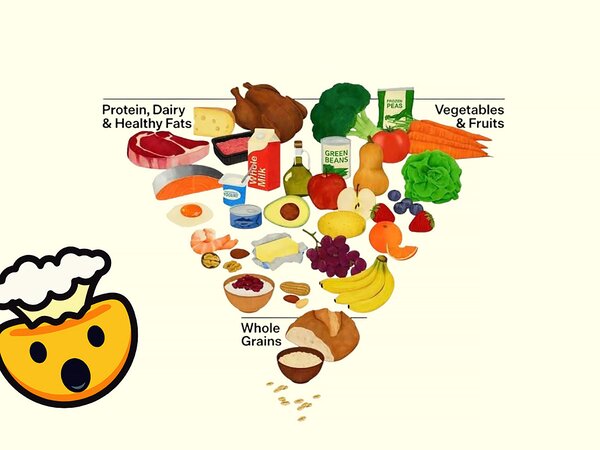
The Pyramid Just Flipped: Why the New "Real Food" Guidelines Change Everything

Is This the End of Erythritol? What This Study Means for Low-Carb Recipes

Beyond the Labels: A Fresh Take on Keto and 'Non-Keto' Foods

Is Erythritol Safe? Unpacking the Latest Research
The Coconut Controversy: Is Coconut Oil Really Healthy?

Sesame Seeds & Oil: Surprising Science of Sesame

Support for the Existence of Lean Mass Hyper-Responders

Are Sugar and Sweet Harmful?
High-Protein Diets: Is More Protein Actually Better?
Is Cholesterol Corrupted by the Dark Side?

The Truth About Flax and Other “Superfoods” & “Toxic” Foods

Is the New Mediterranean-Ketogenic Diet the Next Superdiet?

Should I Count Calories? What You Need To Know About Counting Calories

How Yo-Yo Diets Damage Metabolism and What to Do About It
The Fatome: What is the Best Source of Fat on a Ketogenic Diet?

How Your Microbiome May be Affected by a Ketogenic Diet
Comments & ratings (2)
See this: facebook.com/101242115189178/photos/a.10717919459…
From that "research" Facebook group: "A low-carbohydrate diet leads to a greater body mass and fat mass loss than an isocaloric high-carbohydrate diet because it provides less nutrient MASS." <<< This is utter nonsense. Half of the post is about body expenditure which is not even the main point. What about appetite suppression and using body fat for fuel which they didn't focus on apart from mentioning it in the definition. Their website doesn't exist despite their recent posts on Facebook so no one knows who they really are.