Sesame Seeds & Oil: Surprising Science of Sesame
This post may contain affiliate links, see our disclaimer.

Processed seed and vegetable oils are typically considered to be unstable and inflammatory, in part, because of their high omega-6 content.
Overconsumption of omega-6 fatty acids from these "seed oils" can lead to an increase in the omega-6/3 ratio in your body, promoting inflammation (more about omega-3 here).
Over evolutionary history, the human species rested happy near an omega-6/3 ratio of about 1:1. By contrast, today the average American has a ratio of 16:1 or higher. (Simopoulos, 2016, Simopoulos, 2016Trusted sourceNational Center for Biotechnology InformationNCBI's mission is to develop new information technologies to aid in the understanding of fundamental molecular and genetic processes that control health and disease.Open link)
What’s more, studies in genetically engineered mice suggest that having a higher omega-6/3 ratio alone, independent of differences in dietary content, can contribute to worse health and disease. (Kaliannan et al, 2019Trusted sourceNature ResearchNature Research is here to serve the research community by publishing its most significant discoveries—findings that advance knowledge and address some of the greatest challenges that we face as a society today.Open link) Admittedly, rodent fat metabolism is different that that of humans; but since you can’t germ-line engineer humans, these are the studies we must do to separate essential fatty acid ratios from diet.
That said, I do enjoy five different plant oils. Olive oil and avocado oil are the first two exceptions. But then again, olives and avocado are actually fruits.
Macadamia oil and hazelnut oil are also exceptions. All four of these oils — olives, avocado, macadamia, and hazelnut — are characterized by having far less omega-6 fat and far more monounsaturated fat.
Sesame oil is my fifth exception and actually contains a decent amount of the omega-6 fat, linoleic acid. About 40% of the fat in sesame is linoleic acid, which is less than industrial vegetable oils like soybean and corn oil (55-60%), but not by much. So, what makes sesame special?
Sesame Oil is Stabilized by the Terrific Trio
The omega-6 fats in sesame are protected by powerful natural antioxidants called sesamin and sesamolin. What’s more, as sesamolin is heated, it is thermally converted into an even more powerful antioxidant called sesamol.
In a 2015 study, scientists measured omega-6, linoleic acid, oxidation in the absence of any of these three antioxidations and in the presence of each one. All three members of the trio antioxidants — sesamin, sesamolin, and sesamol — erased 96 to 98% of omega-6, linoleic acid oxidation. Granted, this is an in vitro model, but these data are consistent with the human data mentioned below. (Kumar et al, 2015Trusted sourceNational Center for Biotechnology InformationNCBI's mission is to develop new information technologies to aid in the understanding of fundamental molecular and genetic processes that control health and disease.Open link)

Three antioxidants in sesame almost entirely erases omega-6 oxidation in vitro, which is consistent with sesame’s overall antioxidant effect in humans.
Share on X
Sesame Oil Inhibits Generation of Inflammatory Molecules
The omega-6, linoleic acid, can be converted into inflammatory compounds. One of the proteins important in this conversion is an enzyme called delta-5-desaturate.
It turns out that the sesamin in sesame oil can inhibit this enzyme and, thereby, block the production of certain inflammatory molecules. (Shimizu et al, 1991Trusted sourceNational Center for Biotechnology InformationNCBI's mission is to develop new information technologies to aid in the understanding of fundamental molecular and genetic processes that control health and disease.Open link) At the same time, it leaves omega-3 and anti-inflammatory fat metabolism untarnished. (Umeda-Sawada, 1995Trusted sourceNational Center for Biotechnology InformationNCBI's mission is to develop new information technologies to aid in the understanding of fundamental molecular and genetic processes that control health and disease.Open link)
What does this suggest practically? It suggests that sesame may bias omega-6 and omega-3 metabolism towards an overall anti-inflammatory balance.
Personally, I love drizzling toasted sesame oil over salmon, mackerel, or sardines to get the benefits of sesame plus the omega-3 power of my three favorite fatty fish.

Sesamin in sesame inhibits the enzyme delta-5-desaturase, blocking the generation of certain proinflammatory molecules from omega-6 fat precursors.
Share on X
Clinical Data on the Health Effects of Sesame Oil
There have been several studies demonstrating that sesame oil, sesame extracts, and even tahini can decrease triglycerides and increase HDL or protect against oxidative stress and inflammation in humans. (Sankar et al, 2010Trusted sourceNational Center for Biotechnology InformationNCBI's mission is to develop new information technologies to aid in the understanding of fundamental molecular and genetic processes that control health and disease.Open link)
For example, a study conducted in 45 osteoarthritis patients found that supplementing with only 40 grams of sesame for 8 weeks lowered the go-to blood marker of oxidative stress (MDA) by a significant 30%, as compared to the control group in which MDA levels did not change. (Haghighian et al, 2014Trusted sourceNational Center for Biotechnology InformationNCBI's mission is to develop new information technologies to aid in the understanding of fundamental molecular and genetic processes that control health and disease.Open link)
The human data are complicated by variations in patients’ baseline characteristics, but I believe there is enough there to consider experimenting with sesame oil for yourself.

How to Use Sesame in Recipes
There are several ways you can incorporate sesame into your diet — in the form of seeds, oil or tahini (blended sesame seeds).
Sprinkle some sesame seeds over salads like this Seared Ahi Tuna Bowls, or use to make Everything Bagel Seasoning and add to this Creamy Egg Salad or sprinkled over Deviled Eggs. You can also use the seasoning to make veggie "sandwiches" like this Bell Pepper Sandwich with Smoked Salmon & Avocado.
Sesame seeds go well with salmon as they add both crunch and flavor. Try on this Sesame Crusted Salmon with Coconut Cauli-Rice or Ginger & Lime Grilled Salmon.
If you're low-carb and miss bread, you should make these Nut-Free Keto Buns which use sesame flour and sesame seeds as topping.
My favorite way to eat sesame is by making Tahini Dressing! It's versatile and can be drizzled over any vegetables or proteins. Try with some Grilled Eggplants, Grilled Eggplant & Red Pepper Salad, Chargrilled Broccolini or Smoky Roasted Mushrooms! You can also use tahini dressing serve with any meat skewers, especially chicken.
Love crunchy snacks? Make a batch of these Crispy Multiseed Keto Crackers and serve them with creamy dips such as Baba Ganoush, Roasted Zucchini Hummus or Avocado Hummus.
To add both texture and flavor to any meals, make this Savory Nut-Free Seed Granola or Roasted Nut & Seed Dukkah. Serve them as salad toppings or sprinkled over avocado wedges.
And if you've got a sweet tooth, make a batch of these Low-Carb Tahini Swirl Cookies, Crunchy Nut-Free Keto Cinnamon Cereal or Persian Sohan Asali Keto Caramels. The options are endless!
You may also like
Beyond the Labels: A Fresh Take on Keto and 'Non-Keto' Foods
The Coconut Controversy: Is Coconut Oil Really Healthy?
Is the New Mediterranean-Ketogenic Diet the Next Superdiet?
The Fatome: What is the Best Source of Fat on a Ketogenic Diet?

Complete Guide to Healthy and Sustainable Fish & Seafood

Should I Buy Organic, Grass-Fed, and Pastured Animal Products?
Keto vs. PSMF: Which Approach Promises Rapid Fat Loss?
How To Balance Electrolytes When You Go Low-Carb
Why Pairing High-Protein Keto with Fasting Is the Game-Changer You Need
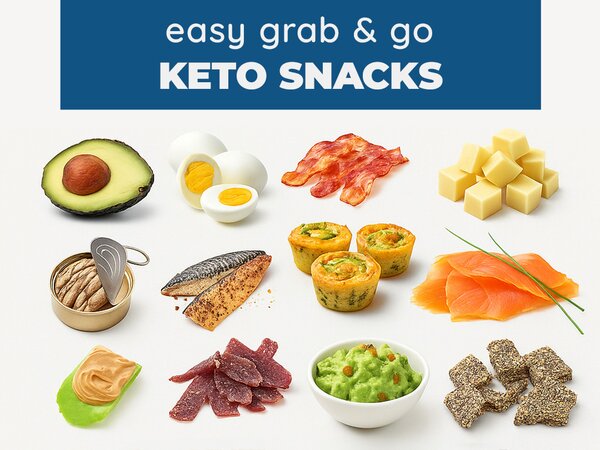
Grab & Go Keto Snacks: 25+ Quick, High-Protein Ideas

Can You Have This While Fasting? 5 Foods and 5 Drinks That Won’t Break Your Fast!
Low-Carb Baking: Everything You Need to Know About Ingredient Swaps

How To Understand Scientific Evidence: How Strong Is the Evidence?

Should I Buy Organic Fruits and Vegetables? Your Ultimate Guide

How to Stay Low-Carb and Keto When You Travel

Is Vegan Keto Possible?
Comments & ratings (16)
IN light of the potential harm of Seed oils -- I was just telling a Friend that "C'mon certainly the small amount of Toasted Sesame it takes to flavor" (measured in Drops practically certainly can't hurt me too much after years of SAD?) I love tahini dressing on my Keto Salads hence Great article ha ha... But now I want to know what the toasting process (prior to squeezing the oil) of sesame does to the Fats thanks... Couple drops (max 1 tsp maybe) of Toasted Sesame Oil in a Miso Soup YUM
I think that what Nick was saying is that sesame oil is unlike any other seed oils. Of course, raw is better but a small amount of toasted sesame oil for flavor is absolutely fine, especially considering what a standard diet looks like for most people. I use it and I believe Nick does too.
Hi Nick. Many congratulations on your outstanding book. A fantastic practical resource for those of us in the Functional Medicine field. Do you know the impact of cooking on sesame seeds and the other ingredients you include in your seed crackers? I was wondering about the oxidation and trans fat formation on heat treatment. I have studies showing that flax is heat stable but not on the other seed ingredients. Also, does organic commercially produced tahini (in my case UK produced) retain the health benefits of raw sesame seeds? Finally, do you recommend hulled or unhulled sesame seeds? Thanks so much for your help. Kind regards. Justin
If you're asking if I have run the assays myself on our recipes, no I have not. You can intuit what you want from the studies cited in this article, but in truth the proof is in the pudding, by which I mean blood tests. If you eat a particular way for a sufficient duration, changes (postive or negative) that are meaningful would be apparent in blood tests. One could get F2 isoprostane, oxPL on ApoB or any number of tests for oxidation status and my bet it roasting some seeds/nuts now and again will not have any adverse impact. Thus, while I can speculate further on the thermo-conversion properties of specific compounds in specific foods, one can only go so far with speculations. Get the blood assay. And, for a short answer on the tahini, 'd say yes it does. Get whichever variety you prefer. Personally, I like the taste and texture of hulled. But that's personal preference.
Hi
Was just wondering what your thoughts are on the Phytic acid content of sesame seeds as some things I have read say to soak seeds before eating. I love sesame seeds and tahini but have been giving it a miss due to this.
There is a lot on social media about these anti-nutrients, including phytates, oxalates, lectins, etc. While I think there is something to the science and certain people have sensitivities, I've seen far more people mislead to believe all foods containing any amounts of these 'anti-nutrients' are unhealthy. Real food is a complex matrix, and every real food could be argued to have its virtues and vices. So, big picture, I wouldn't be concerned about the phytates in sesame unless you have a compelling reason to think you might be particularly sensitive to phytates. I do believe some people are, but not most people. So, unless you truly think you might by sensitive to phytates, I see not reason not to enjoy some tahini, even without a pre-soak 😊. And, hey, if you find it's bothering you, it's easy enough to stop.
I agree with Nick. I see this trend a lot in the carnivore community on Instagram where certain influencers claim that foods like pistachios, spinach etc. are toxic and weight stalling and that they should be avoided, typically in the form of trendy reels with clickbait headings pointing to their nutrition coaching programs and their services. Beware of these scaremongering opportunists. The only thing that matters is if these foods cause any issues for you personally.
Like with other oils, should we be concerned if a sesame oil is virgin or expeller pressed? Organic? Are big brands like Kikkoman or Kadoya, that do typically release that sort of information still nutritionally beneficial?
Virgin sesame oil isn't really a thing. Actually, the traditional way to make it is via camel extraction, which is exactly what it sounds like... actual camel power! https://mg.co.za/article/2018-03-27-camel-power-turns-sesame-into-precious-oil-in-afghanistan/. My general rules for sesame oil are quite simple and come down to don't buy in plastic (as with any oil) and for toasted use as a finishing oil and somewhat sparingly.
Fascinating article, thanks! I love sesame seeds, tahini and sesame oil, they are so packed with flavour and just a little goes a long way, so this was really good to read. Just one possibly odd and rather unscientific question, though. Are you aware of any studies (empirical or otherwise) that have analysed the impact of sesame on female hormones? I ask because a few years ago, I used the rather unproven "seed cycling" method to regulate my period due to severe PCOD, and after six months of alternating linseeds + pumpkin seeds for two weeks with sesame seeds + sunflower seeds for the other two weeks, my cycle normalised and I haven't needed to do that since. Thereafter, due to my N=1 experiment and results, I have been rather wary of using these seeds again in large amounts because I don't want to "mess things up" with my hormones, so to speak. Is this all just hogwash or is there an element of truth in this theory?
Anu, first off, thank you for sharing. That's a very interesting n = 1, whether or not I can explain the phenomenon. In my opinion, the job of anecdotes is to make one go, "hmm... interesting," and this certainly does. But, short answer, I'm not aware of how seed cycling could help normalize menses. I did a google search and there is quite a bit on it. Not much hard science, but just because we might not understand it doesn't mean it doesn't work. What I will say is that PCOS is a condition associated with insulin resistance. The insulin resistance is associated with high levels of the hormone LSH, and not much FSH (both released from the pituitary). The result is the you get a lot of androstenedione (androgen) made from the theca cells in the ovaries that doesn't get made into estradiol, leading to elevated androgens and also a suppression of the hormonal hypothalamic gonadal axis. What eating low-carb can do is normalize this hormonal dysfunction by improving insulin sensitivity. So, perhaps what the seed cycling did as part of a lower glycemic index diet was improve your insulin sensitivity. Might that be possible? All that said, I think it would be safe to have some sesame in your diet, but if it makes you uncomfortable, then don't. It's not a must have food. Hope that helps! Nick
Is toasted sesame oil ok? I don't use it for cooking but I use it for flavor after cooking.
As do I. I typically consider toasted sesame oil a finishing oil. Seems like a waste, if nothing else, to use as the basis for cooking.
Good to know I don't have to give it up, thank you!
This is great! I was actually limiting my addiction to tahini because I thought it was too high in omega 6. Is there a difference between light, brown and black tahini and sesame seeds? I wonder if any of those options are better than the other...
Light = hulled and dark = unhulled.
Light tahini has had the seed’s hulls removed. This means it’s slightly lower in fiber and calcium. But, honestly, I think it tastes better. Dark tahini is made from whole sesame seeds, including the hull. It has a little more fiber and calcium, but it somewhat bitter. Black tahini falls into the latter category. That said, I don't have much experience with true black tahini. It isn't a common product.
You can also get tahini toasted versus raw tahini. Most tahini comes from toasted sesame seeds. In part because of the thermal conversion of sesamolin to sesamol, this actually isn’t that problematic, IMHO. Still, raw tahini hasn’t been heated at all so one could maybe argue it has a better fat profile, although I’m not entirely convinced.
Bottom line, you really can’t go wrong so I would follow your taste buds!