Can I Have Tagatose on a Healthy Low-Carb Diet?
 Emily Maguire, BSc, MSc
This post may contain affiliate links, see our disclaimer.

What is Tagatose?
Tagatose is a food additive that is used as a natural sweetener. It is virtually indistinguishable in taste from sucrose at 92% sweetness but with a slightly quicker onset. Classed as a simple sugar (monosaccharide), it has a similar formula to that of fructose but with a slight change in chemical structure.
Although it provides a similar taste to that of sugar (sucrose), it provides less than half the calories at 1.5 kcal/g (1Trusted sourceSemantic ScholarSemantic Scholar offers peer-reviewed research from the world's most trusted sources.Open link); whilst having a low glycemic index (GI) of 3.
Where Can Tagatose be Found?
Tagatose is produced from lactose naturally found in whey based foods. It is also found in small quantities in foods including apples, pineapples, oranges, raisins and dates.
How Does the Body Absorb and Metabolise Tagatose?
Although the metabolic steps are the same as other simple sugars, the rate at which tagatose is metabolised is slower than related sugars. Only 20% of the tagatose ingested will be absorbed in the small intestine. The rest makes it way to the large intestine where it is fermented (2Trusted sourceNational Center for Biotechnology InformationNCBI's mission is to develop new information technologies to aid in the understanding of fundamental molecular and genetic processes that control health and disease.Open link).
What Are the Benefits of Tagatose?
As well as being used as a natural sweetener, there is interest in the impact that tagatose may have on the health of the body.

It May Offer Benefits to People with Type 2 Diabetes
Early human studies on the use of tagatose in those with type 2 diabetes showed promising results. In one small study, eight subjects consumed 75 g of tagatose of sucrose every day for 8 weeks (3Trusted sourceNational Center for Biotechnology InformationNCBI's mission is to develop new information technologies to aid in the understanding of fundamental molecular and genetic processes that control health and disease.Open link). An oral glucose tolerance test showed tagatose produced no change in fasting glucose or insulin levels; bringing conclusion that it may be a useful adjunct in the management of type 2 diabetes.
A cross, randomised, double-blind experimental design study, examined the effect of tagatose on glucose levels in 85 subjects (4Trusted sourceWiley Online LibraryWiley Online Library offers over 1,600 peer-reviewed journals in medicine, food science and more.Open link). They were given one of three doses of tagatose (2.5 g, 5 g or 7.5 g), three times per day for 6 months. Only those within the 7.5 g group exhibited reductions in fasting glucose levels at 6 months — indicating that a higher level of tagatose is needed to see therapeutic benefits in blood glucose levels.
In a similar, phase 3, randomised controlled, double-blind, placebo controlled trial, the safety and efficacy of tagatose in type 2 diabetic individuals was evaluated. Patients received either 15 g of tagatose three times a day or placebo, for 12 months (5Trusted sourceNational Center for Biotechnology InformationNCBI's mission is to develop new information technologies to aid in the understanding of fundamental molecular and genetic processes that control health and disease.Open link). Results showed those in the tagatose group had a statistically significant reduction in HbA1c compared to placebo at all-time points. Those in the tagatose group also had a significant reduction in both total and LDL cholesterol compared to placebo.
Whilst the exact mechanisms are still not fully understood, there have been some proposed hypotheses to help explain the metabolic effects observed:
- It may inhibit the release of glucose in the body — tagatose appears to be able to promote glycogen synthesis whilst simultaneously reducing its utilisation (6Trusted sourceNational Center for Biotechnology InformationNCBI's mission is to develop new information technologies to aid in the understanding of fundamental molecular and genetic processes that control health and disease.Open link)
- It may delay the absorption of glucose — tagatose may have competition with or inhibit glucose transporters in the small intestine and so blocking its absorption (6Trusted sourceNational Center for Biotechnology InformationNCBI's mission is to develop new information technologies to aid in the understanding of fundamental molecular and genetic processes that control health and disease.Open link)

It Could Increase Fat Loss
In a double-blind, randomised crossover study the impact of supplementing tagatose on subsequent food intake was investigated in 19 men (7Trusted sourceNational Center for Biotechnology InformationNCBI's mission is to develop new information technologies to aid in the understanding of fundamental molecular and genetic processes that control health and disease.Open link). Ingesting 29 g of tagatose at breakfast was shown to reduce food intake by 15% by supper.
In another study, the impact of tagatose on weight loss was investigated in eight diabetes subjects over 1 year (4Trusted sourceWiley Online LibraryWiley Online Library offers over 1,600 peer-reviewed journals in medicine, food science and more.Open link). The results showed that subjects experienced a significant reduction in weight by 12 months.
For many with diabetes, losing weight is often key to gaining control of blood sugar levels. However, weight gain is often a main side effect of insulin. Therefore, tagatose may be a novel supplement that can help mitigate weight gain side effects noticed with diabetes medications.
It May Have Potential Probiotic Properties
When tagatose is metabolised in the large intestine, it is broken down into short chain fatty acids (SCFAs). SCFAs such as butyrate, are known to have a prebiotic mechanisms within the body. In animal studies, tagatose was shown to alter the composition and population of the microflora in the gut (8).
In a randomised, placebo-controlled, double blind study, 30 subjects were given 30 g of raspberry jam containing 7.5 g or 12.5 g tagatose, 7.8 g fructo-oligosaccharide, 7.6 g tagatose plus 7.5 g fructo-oligosaccharide, or 15.1 g sucrose at breakfast for 2 weeks (9Trusted sourceTaylor & Francis OnlineTaylor & Francis publish high quality, rigorously peer-reviewed open access (OA) research across all disciplines.Open link). Those in the higher tagatose group showed an increased butyrate production, compared to those consuming the lower amount of tagatose.

Are There any Side Effects of Tagatose?
Tagatose has been declared as Generally Regarded as Safe (GRAS) under FDA food ingredient rules (8). It has also been approved as a ‘novel food ingredient’ in the EU, with no reported incidences of allergy or toxic side effects.
Although there has been no safety concerns associated with tagatose, there have been some specific side effects noted.
The documented side effects associated with the excessive consumption are gastrointestinal upsets. Due to tagatose not being fully absorbed, the fermentation can cause osmotic effects resulting in more water in the large intestine. The majority of studies have shown that intakes above 30 g can cause symptoms such as stomach distension, flatulence and diarrhoea (4Trusted sourceWiley Online LibraryWiley Online Library offers over 1,600 peer-reviewed journals in medicine, food science and more.Open link). Therefore the recommended dose of tagatose should not exceed 30 g in one day. Under European law, any food products containing more than 15 g of tagatose must be displayed (10).
Should You Add Tagatose into Your Diet?
Although it provides a similar taste and texture as sugar, it provides less than half the calories whilst also having a very low GI. Both of which means that it has little effect on raising blood sugar levels in the body.
There appears to be no serious side effects with it being deemed safe for general consumption and classed as a ‘novel food ingredient’. That being said, it has been shown to cause gastrointestinal upsets which may not make it suitable for everyone to consume.
Even though it has an overall low GI, it is not at a level of zero like other low carbohydrate sweeteners. Therefore, using it in combination with other sweetener options may be the optimal approach.
Therefore, if you are looking to integrate tagatose into your diet, it would be recommended to do it slowly and in small increments. Start at a lower dose (the lowest dose from the studies being 5 g) and gradually increase, never exceeding 30 g within one day.
[Similar to allulose,]() tagatose doesn't seem to crystalize and is suitable for low-carb recipes including low-carb ice-cream, keto marshmallows or sugar-free caramel sauce. Also, if you don't like the aftertaste or cooling effect of erythritol you are going to like allulose.
How to Use Tagatose
Tagatose is almost as sweet as sugar. Similar to allulose, tagatose doesn't seem to crystalize and is suitable for low-carb recipes including low-carb ice-cream, keto marshmallows or sugar-free caramel sauce. Also, it doesn't have the aftertaste or cooling effect of erythritol-based sweeteners.
Just like sugar, tagatose has browning properties and can caramelize and be used as topping in low-carb desserts like creme brulee. Tagatose-based sweeteners are available on Amazon and some health food stores, although they are more expensive than some other low-carb sweeteners.

You may also like
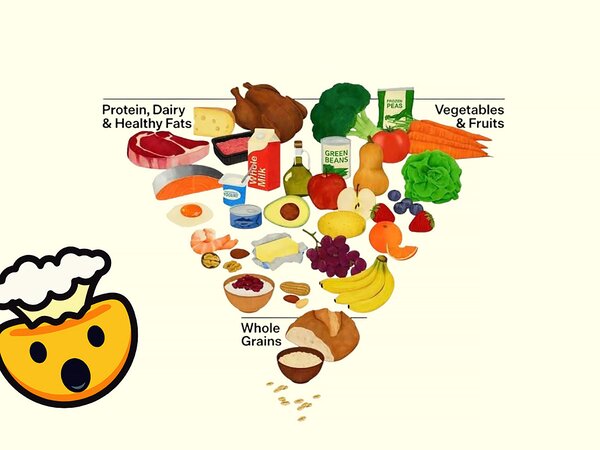
The Pyramid Just Flipped: Why the New "Real Food" Guidelines Change Everything

Is This the End of Erythritol? What This Study Means for Low-Carb Recipes
Beyond the Labels: A Fresh Take on Keto and 'Non-Keto' Foods

Is Erythritol Safe? Unpacking the Latest Research
The Coconut Controversy: Is Coconut Oil Really Healthy?

Sesame Seeds & Oil: Surprising Science of Sesame

Support for the Existence of Lean Mass Hyper-Responders

Are Sugar and Sweet Harmful?

High-Protein Diets: Is More Protein Actually Better?

What is the Carbohydrate Insulin Model?

Is Cholesterol Corrupted by the Dark Side?

The Truth About Flax and Other “Superfoods” & “Toxic” Foods

Is the New Mediterranean-Ketogenic Diet the Next Superdiet?

Should I Count Calories? What You Need To Know About Counting Calories

How Yo-Yo Diets Damage Metabolism and What to Do About It

The Fatome: What is the Best Source of Fat on a Ketogenic Diet?
Comments & ratings (2)
If tagatose is produced from lactose, then should lactose intolerant individuals avoid it? Or is it chemically changed enough to not have as much of an effect?
Although it is made from lactose, tagatose does not contain milk residues and should be safe for those with casein allergies and lactose intolerance: http://www.talkingaboutthescience.com/studies/Taylor2005.pdf