How To Make Coconut Milk Kefir
 Martina Slajerova
- Ready in 2d
- 1.9 g net carbs
- 223 kcal
- Serves 8
This post may contain affiliate links, see our disclaimer.

Fermented foods are not only beneficial for our health but are also great for a keto diet. If you follow a paleo friendly ketogenic diet plan and avoid all dairy, you can still enjoy the health benefits of probiotics and enzymes by making kefir from coconut milk.
Coconut milk kefir is a probiotic-rich non-dairy drink made by fermenting coconut milk and kefir starter cultures. Apart from coconut milk kefir, other sources of probiotics are sauerkraut, kimchi or raw full-fat yogurt if you follow a primal approach.
How about carbs in kefir and other fermented foods? Fermented foods are naturally low in carbs. This is a side effect of the fermentation process where bacteria feed on carbohydrates. As a result, the further the fermentation, the less carbs it will contain.
Tips & Substitutions
Nutrition facts are estimated - the amount of carbs depends on the level of fermentation.
Instead of kefir starter cultures, you can use 2 tablespoons of kefir grains or 2 capsules of your favourite probiotics. Make sure you follow the manufacturer's instructions, e.g. some kefir grains need to be rehydrated before you use them for making kefir.
If you use canned coconut milk, use the whole can, not just the "creamed" part on top.
Step-by-step
If the cream in your coconut milk has separated from the water, shake well or stir with a non-metal spoon. Add the kefir starter and shake or mix until combined. I like this kefir starter because it's easy to use.
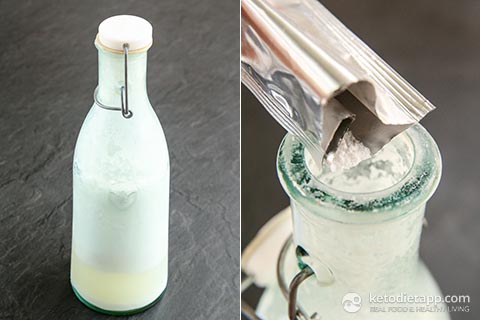
Cover it loosely and leave at room temperature for 24-48 hours in the kitchen or place in the oven (only with the light switched on - do not turn the oven on). The best temperature for making kefir is 22 C - 30 C (72 F - 86 F).
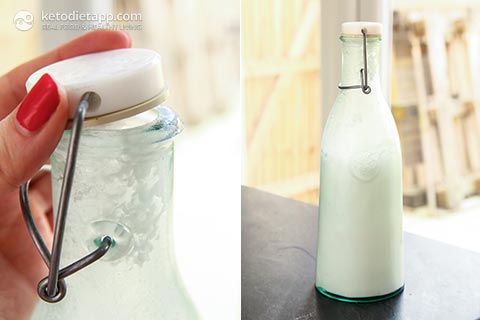
Taste the kefir in 24 hours and leave to culture for up to 48 hours if needed. When done, shake before use and store in the fridge for up to 2 days. You can make a new batch by using about 3 tablespoons of the cultured mixture and mixing it with more coconut milk.
Optionally, add your favourite low-carb sweetener, unsweetened vanilla extract, cinnamon or berries and make a smoothie. Store in the fridge for up to 5 days.
Recipe
How To Make Coconut Milk Kefir
★★★★☆4.4Easy homemade dairy-free kefir made at home. A healthy, gut-friendly addition to your diet!
- Hands on
- 5m
- Overall
- 2d
- Servings
- 8
- 1.9 g
- Net carbs
- 2.3 g
- Protein
- 24.1 g
- Fat
- 223
- kcal
Ingredients makes 4 cups
Instructions
If the cream in your coconut milk has separated from the water, shake well or stir with a non-metal spoon. Add the kefir starter and shake or mix until combined. I like this kefir starter because it's easy to use.
Cover it loosely and leave at room temperature for 24-48 hours in the kitchen or place in the oven (only with the light switched on - do not turn the oven on). The best temperature for making kefir is 22 C - 30 C (72 F - 86 F).
Taste the kefir in 24 hours and leave to culture for up to 48 hours if needed. When done, shake before use and store in the fridge for up to 2 days. You can make a new batch by using about 3 tablespoons of the cultured mixture and mixing it with more coconut milk.
Optionally, add your favourite low-carb sweetener, unsweetened vanilla extract, cinnamon or berries and make a smoothie. Store in the fridge for up to 5 days.
Nutrition per serving, ½ cup/ 120 ml
Carbs 3%Protein 4%Fat 93% of calories
- Net carbs
- 1.9 g
- Total carbs
- 1.9 g
- Fiber
- 0 g
- Sugars
- 0 g
- Protein
- 2.3 g
- Fat
- 24.1 g
- Saturated fat
- 21.4 g
- Calories
- 223 kcal
- Sodium
- 15 mg · 0.63% RDA
- Magnesium
- 52 mg · 13% RDA
- Potassium
- 122 mg · 6.1% EMR
Nutrition by ingredient
| Per 1/2 cup/ 120 ml | Net carbs | Protein | Fat | kcal |
|---|---|---|---|---|
| Coconut milk - used for kefir | 1.9 g | 2.3 g | 24.1 g | 223 |
| Probiotic starter cultures | 0 g | 0 g | 0 g | 0 |
| Total | 1.9 g | 2.3 g | 24.1 g | 223 |
Serving size 1/2 cup/ 120 ml
- Gluten free
- Dairy free
- Egg free
- Nut free
- Nightshade free
- Pork free
- Avocado free
- Fish free
- Shellfish free
- Beef free
- Pescatarian
- Vegetarian
- Vegan
You may also like
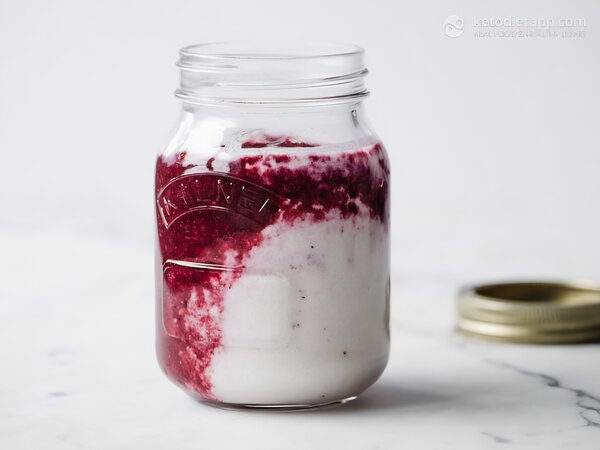
How To Make Coconut Yogurt at Home
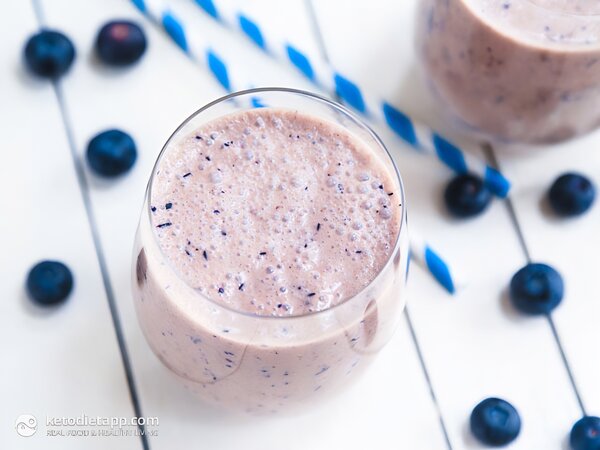
Keto Blueberry Kefir Smoothie
Strawberry Keto Milkshake
How To Make Coconut Milk and Coconut Flour
Foolproof Homemade Coconut Butter
Bulletproof Keto Matcha Latte
Keto Blackberry Cheesecake Smoothie
DIY Keto Protein Shake
How To Make Coconut Cream
How To Make Perfectly Fluffy Whipped Coconut Cream
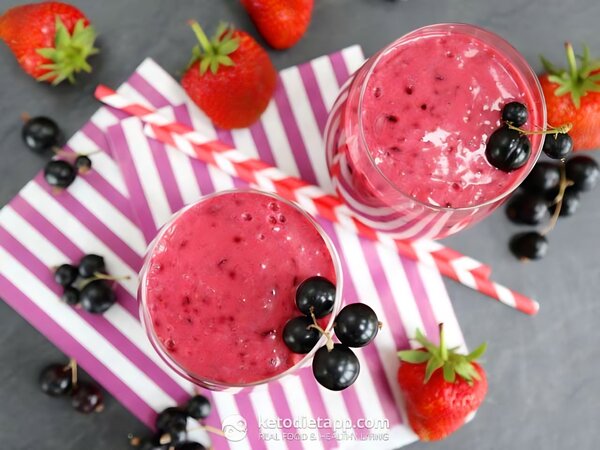
Low-Carb Summer Blackcurrant Smoothie
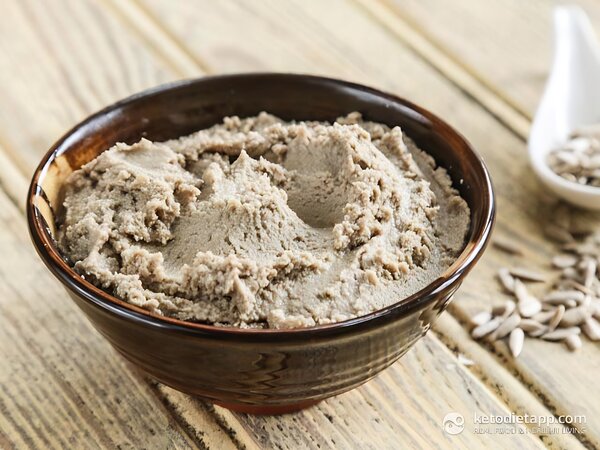
How To Make Sunflower Seed Butter
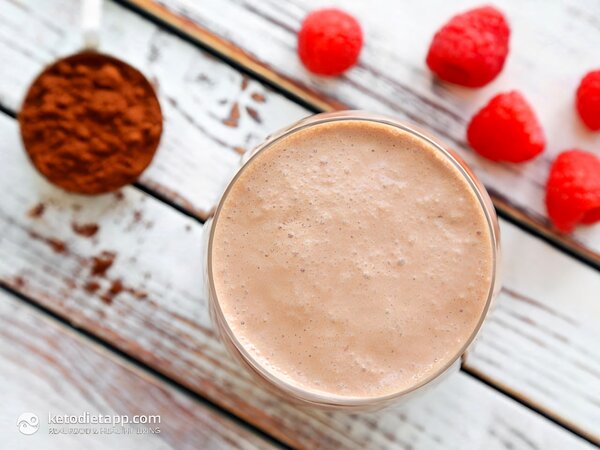
Keto Raspberry & Chocolate Cheesecake Smoothie
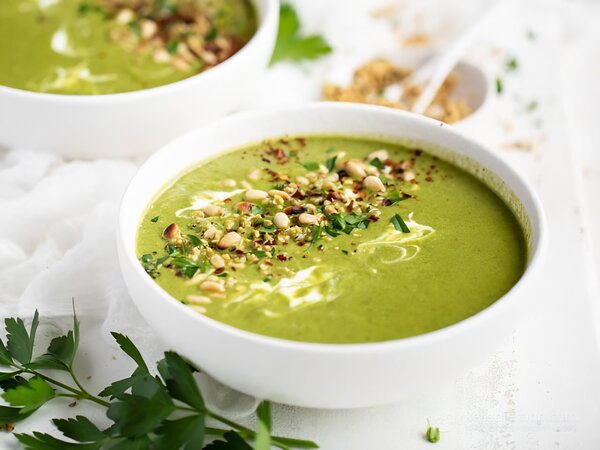
Green Immune Boosting Keto Soup
Creamy Keto Green Smoothie
Keto Bone Broth
Comments & ratings (37)
Can this be made with wafer kefir grains?
I always used milk kefir grains but I think that either should work 😊
What type of probiotic strains, what potency? I have a 15 strain, 35 billion count. So 2 of these capsules? 4? 8?
I have no clue what we’re shooting for 🤷🏼♀️
I think this doesn't matter as much as I've used different strengths and it always worked. You just need some probiotics to kick start the process but I don't think you need to use too many.
Hi
When you following the link in your blog to the kefir starter it says it should only be used on animal milk and not coconut milk......
Thank you for letting me know. That's interesting, they must have updated the description because I'm sure it wasn't there before. I'll check for tips on suitable alternatives and update the post.
Will it work to use Silk unsweetened coconut milk?
It should work fine for kefir although it will be lower in fat.
Hi,
I have milk kefir can i make coconut kefir with milk kefir grains?
Please advised thank you.
Absolutely! That will work and it's easier to get these.
Hi. I ordered the Kefir Starter sachets. I have never made Kefir before. I'm confused as to whether the Starter is added directly from the foil pouch into a milk product, OR,
does the Starter need to be soaked in milk for so many days before it then can be used to make one batch, 4 cups, of Kefir?
Other recipes state that the Kefir grains must be strained out before drinking. When using the Starter is that still required?
Thanks so much.
Hi Linda, it depends on the type of the starter and there should be directions on the sachets. Some types need rehydration before adding to the milk (see note below the list of ingredients). I used powder that I added directly into the milk and never strained it. I hope this helps!
Hello, I really like to read your blog and from now and then follow some of the recipes, however I find them very pricey, too expensive the ingredients for me to follow them as they are being described. Some of them cost too much, specially the ones that you suggest from Amazon. Could them be done on a budget friendly way??
Thank you.
Kindest regards.
Marcela
Hi Marcela, there are almost 1000 recipes on my blog. You may want to browse through them as there are many budget-friendly options 😊
Recipes
What about whole milk kefir? What is the carb content of it? I make it homemade and stopped b/c I was starting keto (3 weeks ago) but as of about 2 weeks ago I started having terrible gastric/chest area pain. I'm wondering if I need to get back to milk kefir but am worried it would have too many carbs. Someone told me there is only 1 gram of carbs for 8 oz. Another told me there was 1 gram of carbs per ounce! Can you help me determine how many carbs are in 8 oz of whole milk kefir?
I do use it in moderation. The carb count depends on the level of fermentation but I'd say it's closer to 1 g carbs per ounce. Have a look at this post for more info about carbs in fermented foods: Ketogenic Diet FAQ: All You Need to Know
If you want to keep your carbs low, it's better to use other foods such as kimchi or sauerkraut:
Homemade Pink Sauerkraut
Easy Homemade Sauerkraut
I did it with home made coconut milk and capsules of probiotics. Is it jsuppose to be runny?! I was expecting to become more thick like milk kefir. And it doesn’t taste good at all...did I do something wrong?
It is not as thick as "regular" milk kefir. If you were to use canned coconut milk, it would be a lot thicker but then you'll also get all the thickeners that I personally tend to avoid. As for the taste, maybe you are not keen on coconut milk kefir?
How does this actually work with milk kefir grains? Doesn't the kefir grains feed off of lactose?
I plan to try this with my probiotic capsules, since I have no kefir grains handy. I've always heated, then cooled, my milk when making yogurt. Is the heating not necessary with this method?
Hi Sherry, not if you keep it at room temperature as instructed - you won't need to heat it up.
So I could just use two capsules of probiotics and not use kefir grains at all correct? Do you find that one is better than the other or do they yield the same results?
Hi Amanda, the conversions listed should yield similar results. However, I only made it with kefir starter cultures so I can't tell if one is better than the other.
I made it with probiotic capsules. 1 qt milk (unheated) with 2 caps Vitacost brand 15 strain 35 billion CFUs probiotics (w/prEbiotics in it & some other helpful stuff).
The kefir was amazing. Nicely thickened in 36 hrs (our house is kept at 76-78 in summer as we have very long summers).
Kefir grains are the way to go moneywise but I can’t find any locally. Kefir grains will also multiply so u can sell them or have back up or just Eat Them. Highly beneficial to eat!
Thank you so much for sharing these tips!
We have recently started eating fermented foods on a regular basis, I am keto, but I don't like coconut milk. About how many net carbs should we count for home made whole milk (or raw milk) kefir?
That's hard to tell, I would personally go with nutrition facts that are available for store-bought kefir, just to be safe. In my opinion, store-bought products tend to list more carbs than homemade (same applies to yogurt). If you want to add fermented foods, you can also try sauerkraut.
Did you use water kefir grains or milk kefir grains when you made this coconut milk kefir? Or doesn't it matter?
I always used milk kefir grains but I think that either should work 😊
I make yogurt with coconut milk. Would the carbs be about the same after fermenting? I love it you should add the yogurt.
I've been working on a coconut milk yogurt too 😊 I used coconut cream for that. It has more carbs than coconut milk but I think the carb content per cup will be about the same or slightly more, round 4-6 grams.
Hi Martina, Thanks for your reply. I think I'll skip the kefir for now because it really doesn't leave much room for the rest of the day if my goal is 20 carbs... 😉
The website I bought the bamboo-fibre from is a Dutch one : http://www.handmadeandbio.nl/product/1653624/nature-cookta-bamboevezel
I think the product comes from Hungary. I got my sesameflour from the same company and it's good and not too expensive. Have a great day! 😊
I love sesame seed flour - make a great keto bread! 😊 Nut-Free Keto Buns
I know! 😃 I make your Keto Bread all the time, I love it! 👍🏻 Haven't tried the buns yet but they're on my list.
Speaking of bread. Could you explaine something to me about Soulbread?
I did ask on site where the recipe is from but I don't get an answer. The thing is, I see that the recipe calls for baking soda, cream of tartar AND baking powder. But if I understand you correctly, baking powder IS baking soda plus cream of tartar. So why use both? And doesn't store bought baking powder have starch in it? The thing we want to avoid most? I'm confused.
Hi Boxie, as a matter of fact, I've made my version of the Soul bread and simplified it. I don't think there is any need for all these ingredients. As you say, baking powder is extra. I also made it more primal-friendly and will share it on my blog next week. I think this recipe was created by people in a low-carb forum 😊
Hi Martina, I just started the Keto lifestyle and for two years now I drink full fat grass fed raw milk which I get from a local farm. Since raw milk is still high in carbs I decided to make kefir from it but I can't seem to find the amount of carbs in it. Could you help me with this?
Also, I don't really understand how the amount of carbs in the recipe above increases after fermenting. Your homemade coconut milk has 3.2 gr carbs and Aroy-D coconutmilk has 2 grams of carbs (at least here in The Netherlands 😉). I thought when you fermented milk, carbs would become less. ?
Another question of topic: are you familiar with cooking with bamboo fiber? I got some online but can't seem to find any recipes 😕
Love your Ultimate Keto Bread and Pumpkin Spiced Granola by the way!! 👍🏻😃
Hi Boxie, this is always an estimate but the carbs will be reduced by up to 70% (more about fermentation & carbs is here: Ketogenic Diet FAQ: All You Need to Know)
I think that there are 2-3 grams net carbs per 100 grams so it's 6-7 grams of carbs per cup (~ 240 g). I estimated the carb count by reducing it by 40% (it can be anything between 40-70% and I used the lower value to be safe). For the homemade coconut milk, I used average values.
I'm not familiar with bamboo fiber but I'll look into it. I tried to find it in the UK but it seems to be quite difficult. Can you point me to the place where you bought it?
Thank you for your kind words, I'm glad you like my recipes! 😊