The Importance of Potassium and Top 7 Low-Carb Foods High in Potassium
 Emily Maguire, BSc, MSc
This post may contain affiliate links, see our disclaimer.

What is Potassium and why is it needed?
Just like magnesium, potassium is one of the main electrolytes within the body. Along with sodium and chloride, potassium is responsible for maintaining electrolyte balance. Electrolytes are responsible for sending electrical impulses around the body. Specifically, potassium assists in a range of essential bodily functions including: (1).
- Water balance
- Blood pressure control
- Muscle contractions
- Digestion
- Heart rate and rhythm
- pH balance
Normal Ranges in the Body
The average content of potassium in adults is 40-50 mmol (1.6-2.0 g)/kg of body weight (2). Someone who weighs 65 kg would therefore have a level of 2600-3250 mmol in their body.
The concentration of potassium is greater within the intracellular fluid (150 mmol/L) with the remainder in the extracellular fluid (3.5-5.5 mmol/L) (2).
The amount of total potassium is directly related to the level of lean tissue mass. As men generally have greater lean muscle mass, they have a greater level in the body.
Testing of potassium levels is done within the blood. This means it is testing the extracellular fluid and subsequently the normal ranges for the test will be between 3.5-5.5 mmol/L.
Recommended Intakes
The body cannot naturally produce or make potassium and so it needs to be obtained from the diet.
The recommended intakes vary between America and Europe. In the USA the Adequate Intake (AI) for adults is 4.7 g/day (4700 mg/d) and in Europe, the Reference Nutrient Intake (RNI) is set at 3.5 g/day (3500 mg/d) (3Trusted sourceWiley Online LibraryWiley Online Library offers over 1,600 peer-reviewed journals in medicine, food science and more.Open link, 4). The lower reference nutrient intake (LRNI/ EMR), is the minimum amount that needs to be met within a day and is set at 2 g/day for adults (3Trusted sourceWiley Online LibraryWiley Online Library offers over 1,600 peer-reviewed journals in medicine, food science and more.Open link).
As the levels are directly correlated with muscle mass, men may require a slightly higher dose.
Low and High Levels of Potassium
Various hormonal and other factors (including sodium levels), regulate potassium within the body. As with the other electrolytes, it is the role of the kidneys to regulate potassium balance.
Hypokalemia
Hypokalemia is when the body has low levels of potassium (<3.5 mmol/L). This can cause symptoms including:
- Irregular heart beat
- Muscle weakness or cramping
- Glucose intolerance
- Extreme fatigue
- Constipation, nausea and/or vomiting
Developing such low levels generally should not happen if you are consuming enough potassium in your diet. However, a mild deficiency can be much more common causing symptoms including (5Trusted sourceSpringer LinkSpringer Link offers peer-reviewed research from the world's most trusted sources.Open link).
- An increase in blood pressure
- Increased salt sensitivity
- Increased risk of kidney stones
- Heart arrhythmias
- Mild muscle cramping
- Headaches
Hyperkalemia
Hyperkalemia is when potassium levels are too high in the body, classed as >7.5 mmol/L (6Trusted sourceNational Center for Biotechnology InformationNCBI's mission is to develop new information technologies to aid in the understanding of fundamental molecular and genetic processes that control health and disease.Open link). This often only occurs when potassium intake exceeds 17.6 g/day which is usually done through supplementation. As well as excessive supplementation, certain medical conditions (such as kidney disease) and medications can cause high potassium levels.
The most common symptom of high potassium is abnormal heart beat. With the severest outcome being that of cardiac arrest (7Trusted sourceNational Center for Biotechnology InformationNCBI's mission is to develop new information technologies to aid in the understanding of fundamental molecular and genetic processes that control health and disease.Open link).
Potassium Levels on a Low Carb Diet
In the first few weeks of starting a low-carb diet, the symptoms of the “keto-flu” can come into full effect. One of the major reasons for the symptoms occurring is due to a change in electrolyte balance. Potassium is one of those electrolytes that can be affected.
In the first few weeks, your body loses a significant amount of water. As this is processed through the kidneys this can then affect the electrolyte balance. Sodium is often the first electrolyte to be lost. Since potassium is closely related to sodium and because the kidneys control the levels, a drop-in potassium can also be experienced.
The symptoms of muscle cramps, heart arrhythmias and fatigue could be a combination of lower salt and subsequent potassium levels.
Therefore, ensuring you get adequate salt in your diet is important both for sodium and potassium balance and to alleviate any keto-flu.

Top 7 Potassium Rich Foods
Below is a list of the top 7 foods high in potassium that you should eat daily to hit your required levels.
1. Spinach
All dark green leafy vegetables offer an abundance of nutrients including spinach. One cup (180 g) of cooked spinach offers a significant amount of potassium at 839 mg (24% of RNI) (8Trusted sourceUSDA FoodData CentralThe USDA's food composition data, maintained by its Agricultural Research Service.Open link). That is almost double what a medium sized banana offers in the way of potassium at only 422 mg!
Although spinach has one of the highest magnesium contents, other dark green leafy veg that offers a good source of magnesium include kale, swiss chard and broccoli.
2. Avocados
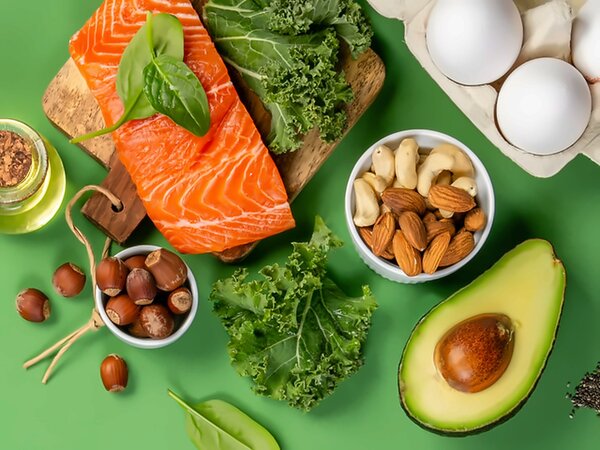
As well as providing a significant amount of healthy fats, avocados are also packed full of certain electrolytes and minerals.
Just one average avocado (136 g) contains 690 mg (20% RNI) of potassium (9Trusted sourceUSDA FoodData CentralThe USDA's food composition data, maintained by its Agricultural Research Service.Open link).
3. Zucchini
Squash is a a great versatile vegetable that also carries with it, a relatively low carbohydrate content at just under 4 g (net carbs) per cup.
It is also relatively high in potassium with one medium zucchini (192 g) providing 512 mg (15%) (10Trusted sourceUSDA FoodData CentralThe USDA's food composition data, maintained by its Agricultural Research Service.Open link).
4. Salmon
Salmon is best known for providing an excellent source of omega 3, but it is also packed full of other essential nutrients. Whilst providing a great source of the B vitamins and vitamin D it is also a good source of potassium. For a 3-oz serving it provides 416 mg (12% RNI) (11Trusted sourceUSDA FoodData CentralThe USDA's food composition data, maintained by its Agricultural Research Service.Open link).
Other fish including cod, sea bream, monkfish, sardines, herring and mackerel also offer a good source of magnesium.
5. Beef
Often when people look at sources of potassium they list mostly fruits and vegetables but meat sources offer a significant amount of potassium as well. A 4-oz steak provides 384 mg (11% RNI) of potassium (12Trusted sourceUSDA FoodData CentralThe USDA's food composition data, maintained by its Agricultural Research Service.Open link).
As well as beef, other meats (such as pork and lamb) and poultry (such as chicken and turkey) also offer a good level of magnesium.
6. Mushrooms
Mushrooms make a great base for many low-carbohydrate dishes and can be a great option for those following more of a plant based low-carbohydrate diet. They are known for being higher in vitamin B12 as well as having a great antioxidant capacity which can help fight free radicals (13Trusted sourceNational Center for Biotechnology InformationNCBI's mission is to develop new information technologies to aid in the understanding of fundamental molecular and genetic processes that control health and disease.Open link).
Whilst all mushroom do have a higher potassium level, just 1 cup (72 g) of crimini mushrooms have the highest at 323 mg (9% RNI) (14Trusted sourceUSDA FoodData CentralThe USDA's food composition data, maintained by its Agricultural Research Service.Open link).
7. Cauliflower
Cauliflower is a cruciferous based vegetable and is extremely nutrient dense, including having a high antioxidant profile in sulfur-containing compounds. One cup (107 g) contains 320 mg of potassium (9% RNI) (15Trusted sourceUSDA FoodData CentralThe USDA's food composition data, maintained by its Agricultural Research Service.Open link).
Other Sources of Potassium
Nuts and seeds are a great staple within a low carbohydrate diet providing sources of good fats, protein and certain minerals. Almonds offer the highest potassium content out of all the nut options with 1 oz (28 g) providing 200 mg (6% RNI) (16Trusted sourceUSDA FoodData CentralThe USDA's food composition data, maintained by its Agricultural Research Service.Open link).
Beets are often classed as a superfood as they are packed full of phytonutrients that act as powerful antioxidants. As well as being high in both folate and manganese, it is a great source of potassium. One cup (136 g) provides 442 mg (13% RNI) (17Trusted sourceUSDA FoodData CentralThe USDA's food composition data, maintained by its Agricultural Research Service.Open link). Since they contain more carbs than other vegetables, they should be eaten in moderation if you follow a low-carb diet.
Supplementation
Due to the risk of developing Hyperkalemia (high potassium levels), supplements are rarely sold with a content of more than 85 mg. Before ever supplementing with potassium, you should always consult with a health professional (18Trusted sourceNational Center for Biotechnology InformationNCBI's mission is to develop new information technologies to aid in the understanding of fundamental molecular and genetic processes that control health and disease.Open link).
To supplement potassium, you can use:
Some people find that supplementing with a small amount of potassium chloride within the day can help with any side effects of low potassium in the diet. A dose of around 20 mEq dissolved in a glass of water and taken with food 1-2 times per day can help with any symptoms of low potassium levels (19). It needs to again be stressed here that if you are unsure of your levels, you must consult a health care professional to recommend on the levels.
Cream of tartar is an ingredient often used in baking and cooking recipes. In itself, it carries a great potassium content with 1/2 teaspoon providing almost 250 mg. This can be a good, natural way to supplement with potassium. However caution must be taken to not over supplement with this as hyperkalemia can occur.
If your low carbohydrate diet is well formulated with foods containing potassium (as listed above) then you should not need to supplement.
However, in the first couple of weeks when you are experiencing keto-flu, the water loss may cause an imbalance in both sodium and potassium. To help with any of the side effects, taking 1-2 teaspoons of lite salt (which is 50% sodium chloride and 50% potassium chloride) per day can be of benefit. If the side effects still persist then adding in the above potassium chloride supplement may also help.
Low-Carb Recipes High in Potassium
Below is a collection of KetoDiet recipes that are packed full of potassium:
- Keto Pork & Kohlrabi Stew, 1778 mg
- Stuffed Avocados, 800 to 1400 mg
- Keto Beef Stroganoff Soup, 1406 mg
- Quick & Easy Eggs Benedict, 996 mg
- Beef, Spinach & Mozzarella One-Pot Bake, 899 mg
- Easy Avocado & Egg Salad, 875 mg


- Spicy Keto Salmon Burgers with Lemony Kale, 850 mg
- Keto Zucchini Breakfast Hash, 691 mg
- Keto Breakfast Sausage & Guac Stacks, 775 mg
- Goat Cheese & Spinach Salad Bowl, 541 mg
- Paleo Spinach Tabbouleh, 525 mg
- Low-Carb Zucchini Apple Pie, 515 mg


You may also like
The Pyramid Just Flipped: Why the New "Real Food" Guidelines Change Everything
Is This the End of Erythritol? What This Study Means for Low-Carb Recipes
Beyond the Labels: A Fresh Take on Keto and 'Non-Keto' Foods
Is Erythritol Safe? Unpacking the Latest Research
The Coconut Controversy: Is Coconut Oil Really Healthy?
Sesame Seeds & Oil: Surprising Science of Sesame
Macadamia Nuts - King of Keto Nuts
Salmon: The Redder the Better
Can the Ketogenic Diet Help Patients with Binge Eating Disorder?

Support for the Existence of Lean Mass Hyper-Responders

Are Sugar and Sweet Harmful?
High-Protein Diets: Is More Protein Actually Better?
The Science of Cheese: All You Need To Know

What is the Carbohydrate Insulin Model?
Is Cholesterol Corrupted by the Dark Side?
Mediterranean Ketogenic Diet for Alzheimer’s Prevention - New Scientific Paper, April 2021
Comments & ratings (15)
If I choose to take an electrolyte supplement, how many mg (or % of daily value) in magnesium and potassium should the supplement contain? I would prefer a pill or drops over powder.
Thanks!
Hi Alexis, here's a guide for magnesium supplements: Complete Guide to Magnesium Supplementation
As for potassium, most supplements only contain about 5% AI. I get mine from foods high in electrolytes or by making my electrolyte drink: Beat Keto-Flu with Homemade Electrolyte Drink
Awesome article, gave me some insight on what was happening when I started a water fast. On day 3 I had terrible jaw cramping, twitching of my extremities all day long, as well as an enlarged prostate that twitched. It was very weird! Your article gave me insight on how it could be caused by low carb aka. Burning all my carbs= water + sodium + potassium release. I’ve been adding 1 tsp of cream of tartar in water to my diet, as well as lots of tomatoes and all my symptoms went away!
Thank you Bryson, you may want to try this recipe:Beat Keto-Flu with Homemade Electrolyte Drink
It appears that one must consume the equivalent of 4 cups of spinach or 5 large avocados every day to meet one's potassium requirement.
Am I interpreting the recommended potassium levels correctly?
That is correct as to the RNI only from these foods. However, keep in mind that there is potassium in other foods you are eating. I personally find that having one avocado a day helps me get close to my daily needs (using food tracking: ketodietapp.com).
How do you take the Lite Salt? Do you dissolve it in water, and if so, how much so it will be tolerable to drink?
Hi Karen, you can use it in this recipe: Beat Keto-Flu with Homemade Electrolyte Drink (only a small amount such as 1/4-1/2 teaspoon per recipe).
Mushrooms don't contain vitamin b12? Only animal sources (meat, dairy, eggs) contain b12, plant foods do not. Please correct this.
Mushrooms do contain vitamin B-12: ncbi.nlm.nih.gov/pmc/articles/PMC4056650
I have to be careful about potassium because chemo just depleted me and I still work on keeping my levels in range. I have a script supplement but use avocado to help. My magnesium and iron also went low so the perfect meal was a good free range burger topped with avocado smashed with chopped onion and a medium cooked egg on top. I ate that every night one week while on chemo and blood test improved. I feel it’s good to look at how good food can help before pills.
Hi Susanne,
Thank you so much for sharing this. And yes, I think trying to look at getting all nutrients through food is the best first options before supplementing
Hi Martina
I hope you are receiving this email
I'm a RD in Quebec and I just received a convocation by the order of dietitians because I indorsed the letter of Èvelyne Bourdua-Roy (physicians) about the KetoDiet
I have really good results with my clients with the KetoDiet
RD in Quebec are really close mind
I see this meeting like an opportunity to involve in Quebec
but can you tell me if your country have national recommandations about low carbs approach?
I need to have some national recommandations because this will help me.
If you have some advices or comments please let me know to be ready on November 2nd
Thank you
So I'm totally confused!!!!! Are you saying we should supplement? Or just put salt in our water?
You don't have to supplement if you are getting enough potassium from your diet. But you may need to supplement if you're not getting enough or if you have higher demands. Mild potassium deficiency is quite common when you start following a low-carb diet:
... Ensuring that you get the recommended intake through your diet will make sure that you reach the adequate intake.
If the symptoms of muscle cramping and heart arrhythmia continue then taking in a 1-2 tsp of lite salt per day can help alleviate this. Always be sure to get any blood levels checked before ever supplementing with potassium.